Showing posts with label volume. Show all posts

Saturday, May 17, 2014

Pyramid


This is something I made a few years ago for a school project. It is in the shape of a regular square pyramid.

With the given dimensions, the pyramid would have a volume of about 572.33cm3 and a lateral area of 344.2008cm3. (~CS1)

Cylinders


-SV(1)

Tennis Balls


I was on my way to hit the courts when I came across a tennis ball along with a can of three tennis balls. I remembered a math problem with a sphere and a cylinder and comparing their volumes. So I decided to insert the image into gsp and use geometry in my real life. I used the formula for the volume of a cylinder and the formula for the volume of a sphere and found that the volume of the ball was around 3 cm cubed and the volume of the cylinder was around 13 cm cubed. Meaning that the space in between the balls would account for about one extra ball. (~WM5)


Sunday, May 11, 2014

Measuring Lateral Area and Volume of a Cone

After finding a three dimensional cone in the art room, I decided to put it to use to find its circumference and area, as well as use Theorem 12-7 and 12-8 to find its lateral area and volume.


First, I began by measuring the cone's height (h) and slant height (l).


Next, I measured the radius, and used that to calculate both the circumference of the base and the area.


After collecting all the needed information, I put it to use to calculate lateral area using Theorem 12-7, and volume using Theorem 12-8.

Theorem 12-7: The lateral area of a cone equals half the circumference of the base times the slant height.

Theorem 12-8: The volume of a cone equals one third the area of the base times the height of the cone.

(~RO5)

Friday, May 9, 2014

Surface Area of the Pentagon


When I was in Washington D.C. last week I noticed that the pentagon was just a regular pentagonal prism. With this I searched online to figure out the height and side length of the Pentagon. From these dimensions I was able to figure out the Lateral Area and the Surface Area of the Pentagon. (~AL1)

Thursday, May 8, 2014

Cubic Net

DSCN3083.JPG


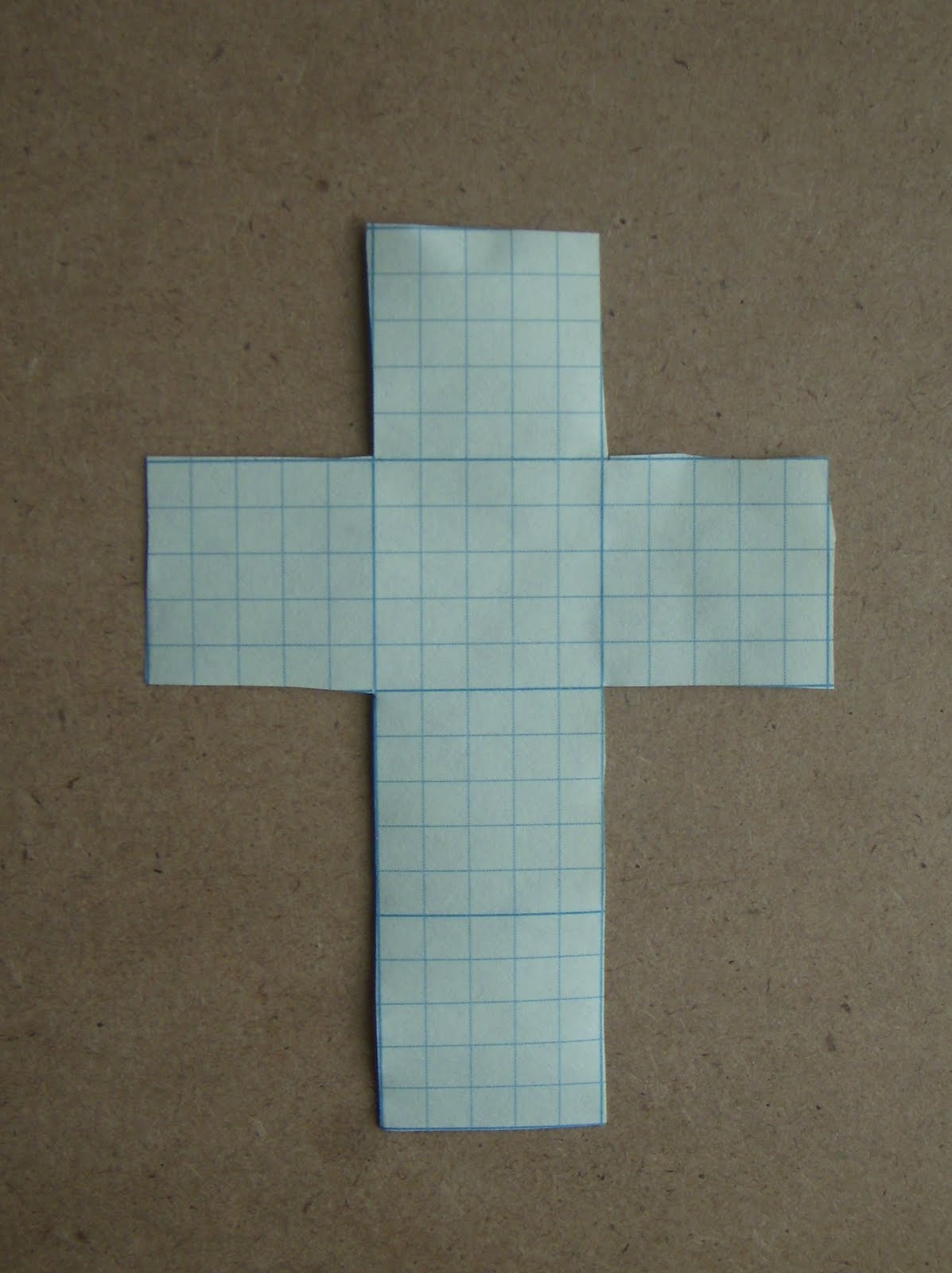
Here we have a the net of a cube. A net is defined as “any set of polygons joined edge to edge that, when folded along the edges between adjoining polygons so that the outer edges touch, form a polyhedron” (Wiktionary). It is clear that each side of the square is a length of 5 units. It is also much easier to see that a cube has six faces, and therefore easier to calculate the surface area of the cube:
5 x 2 x 6 = 150 square units.


DSCN3085.JPG


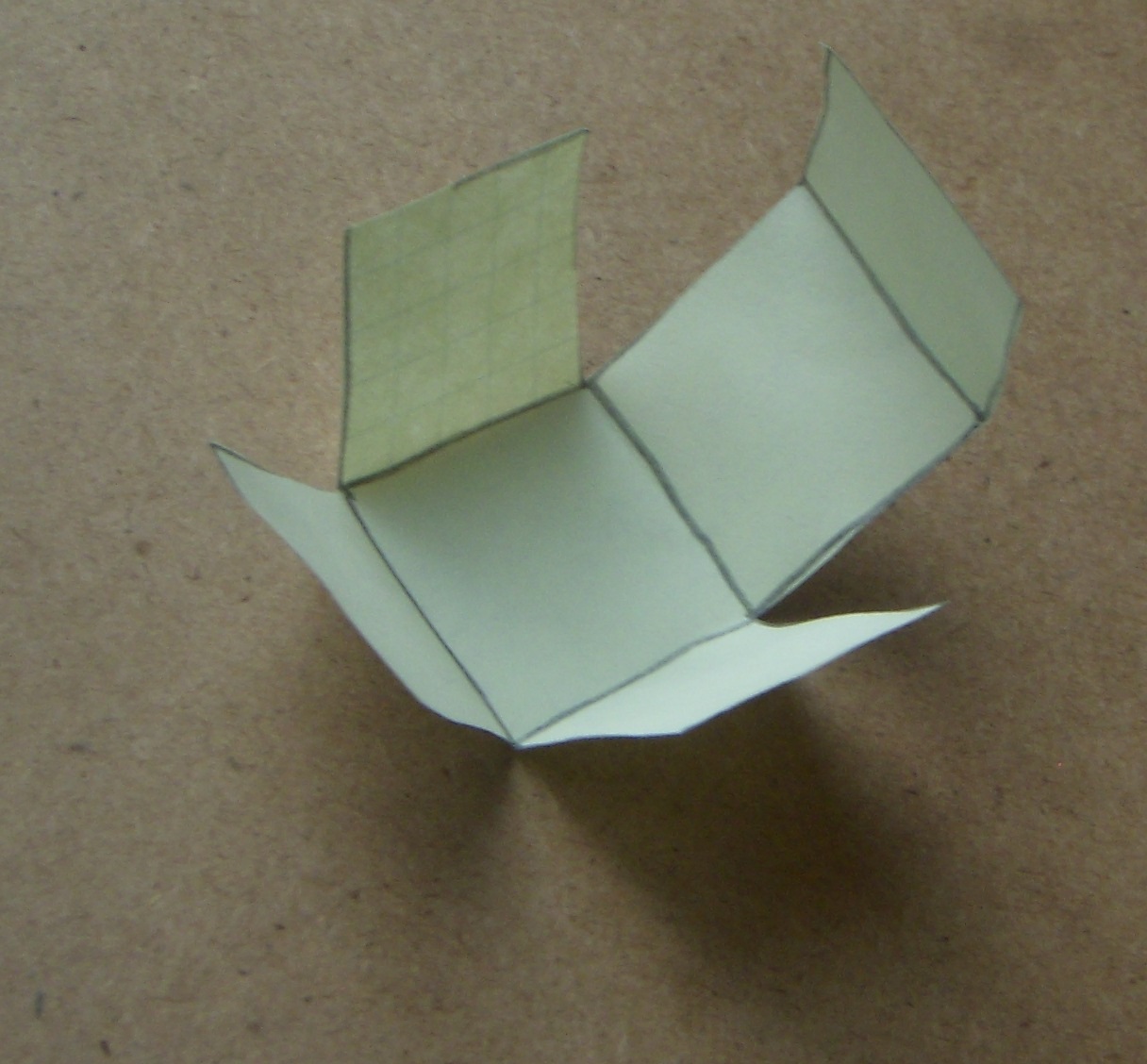
Here is the folding process.


DSCN3088.JPG


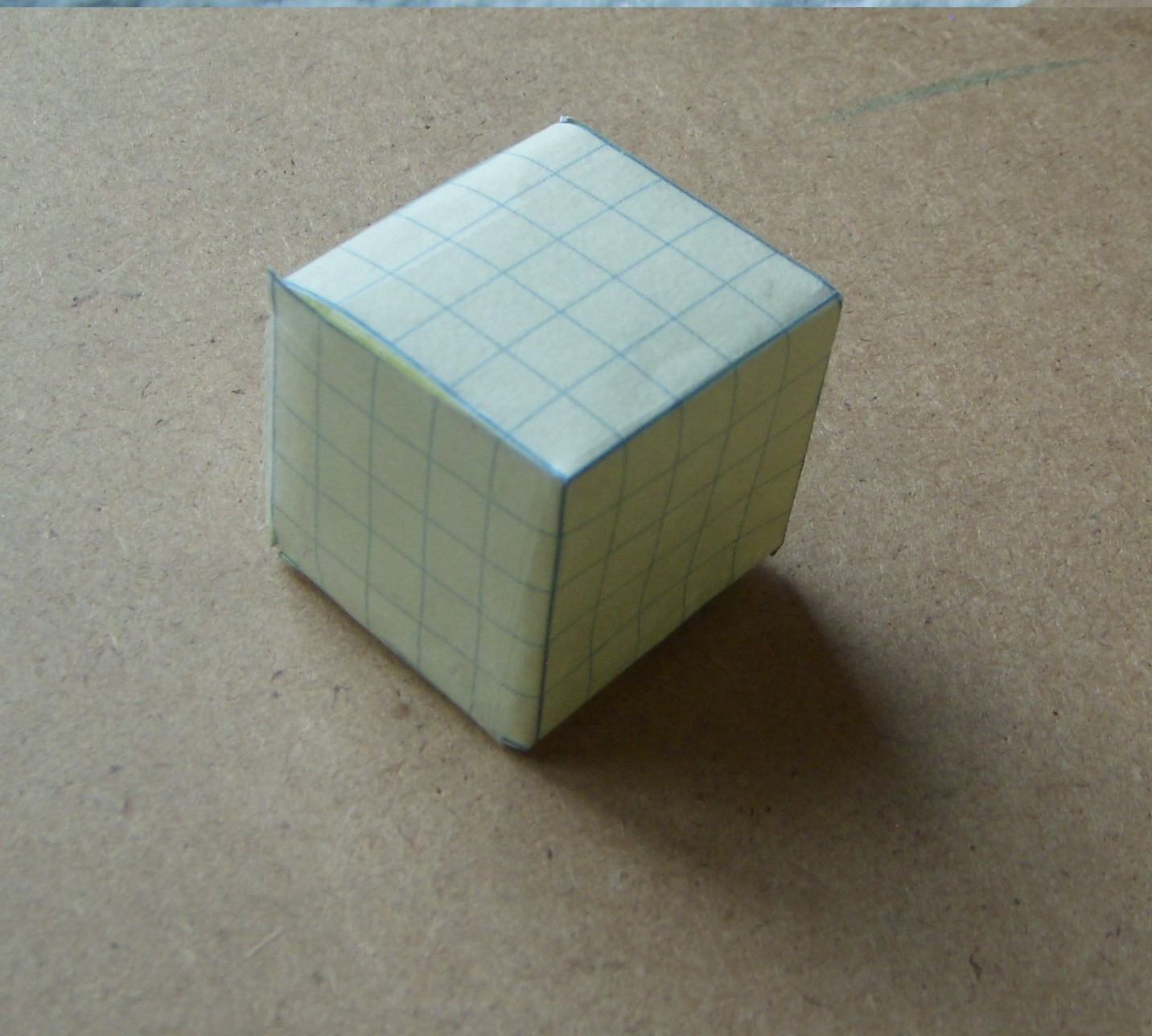
Here is the finished product: the cube. It is easier to see how to calculate the volume of the cube now, as it is 3-Dimensional now as opposed to 2-Dimensional. 53 = 125 cubic units.

Square Area of the Cube: 150 square units.
Volume of the Cube: 125 cubic units.

~JC1